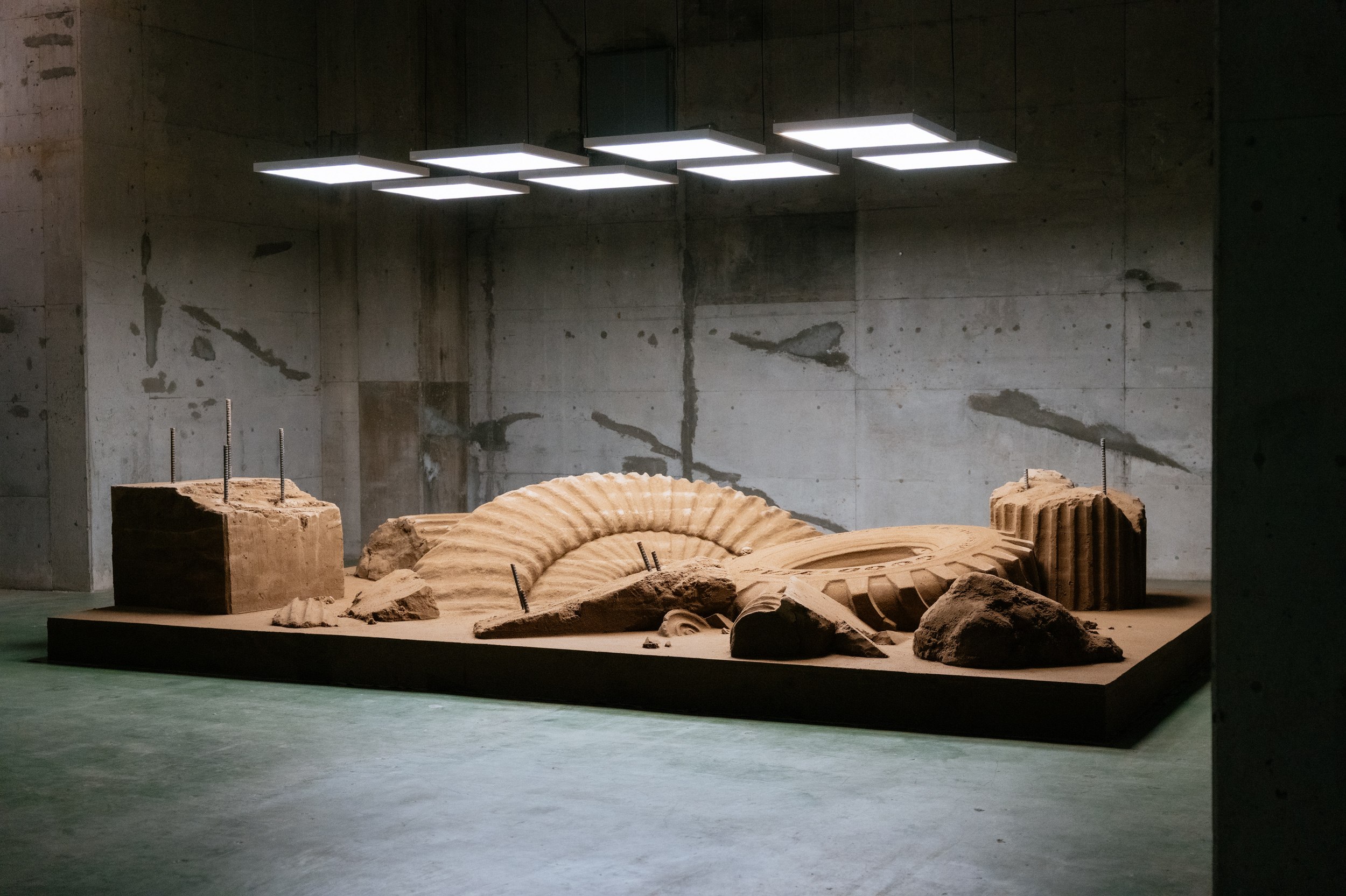
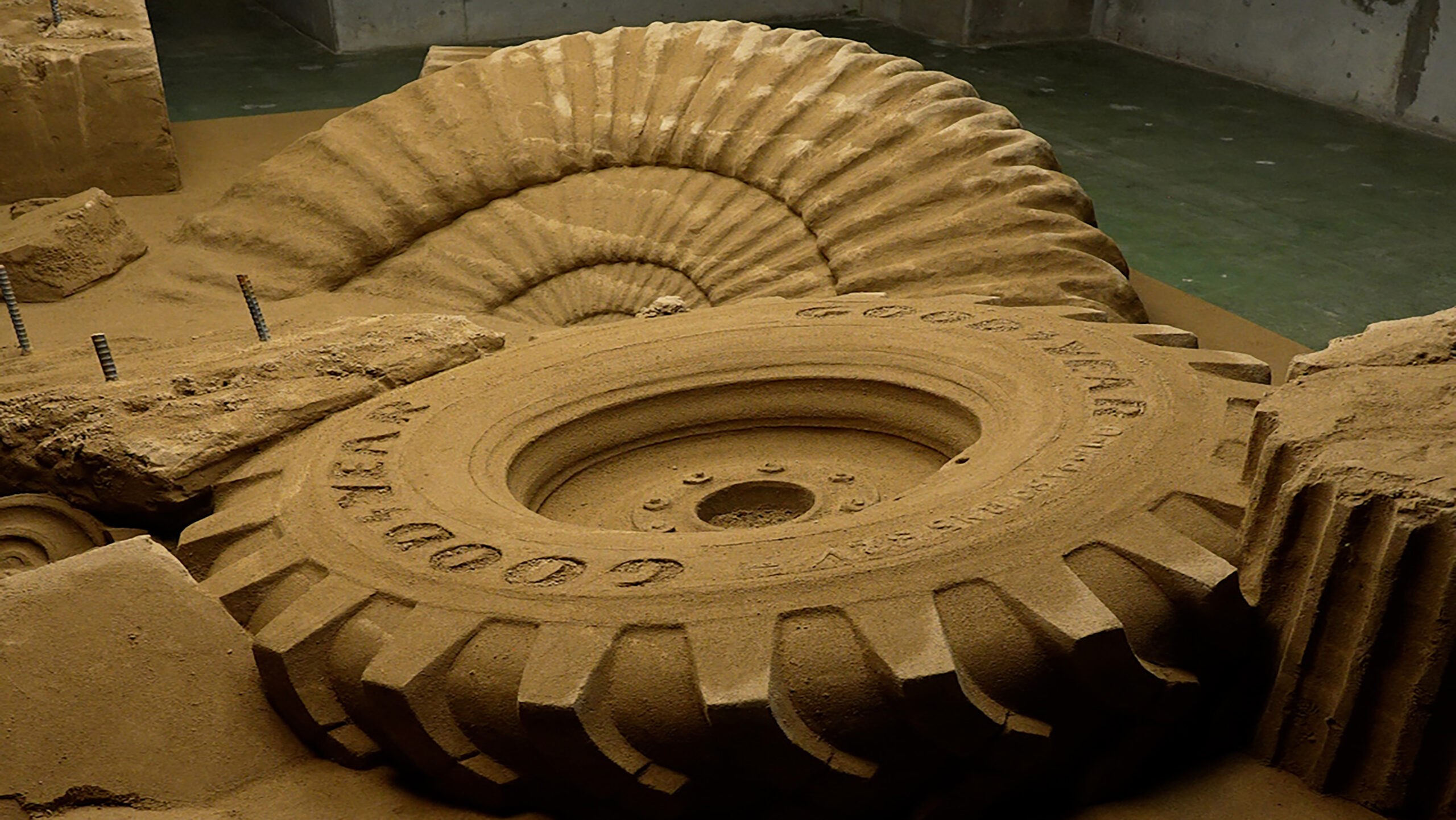
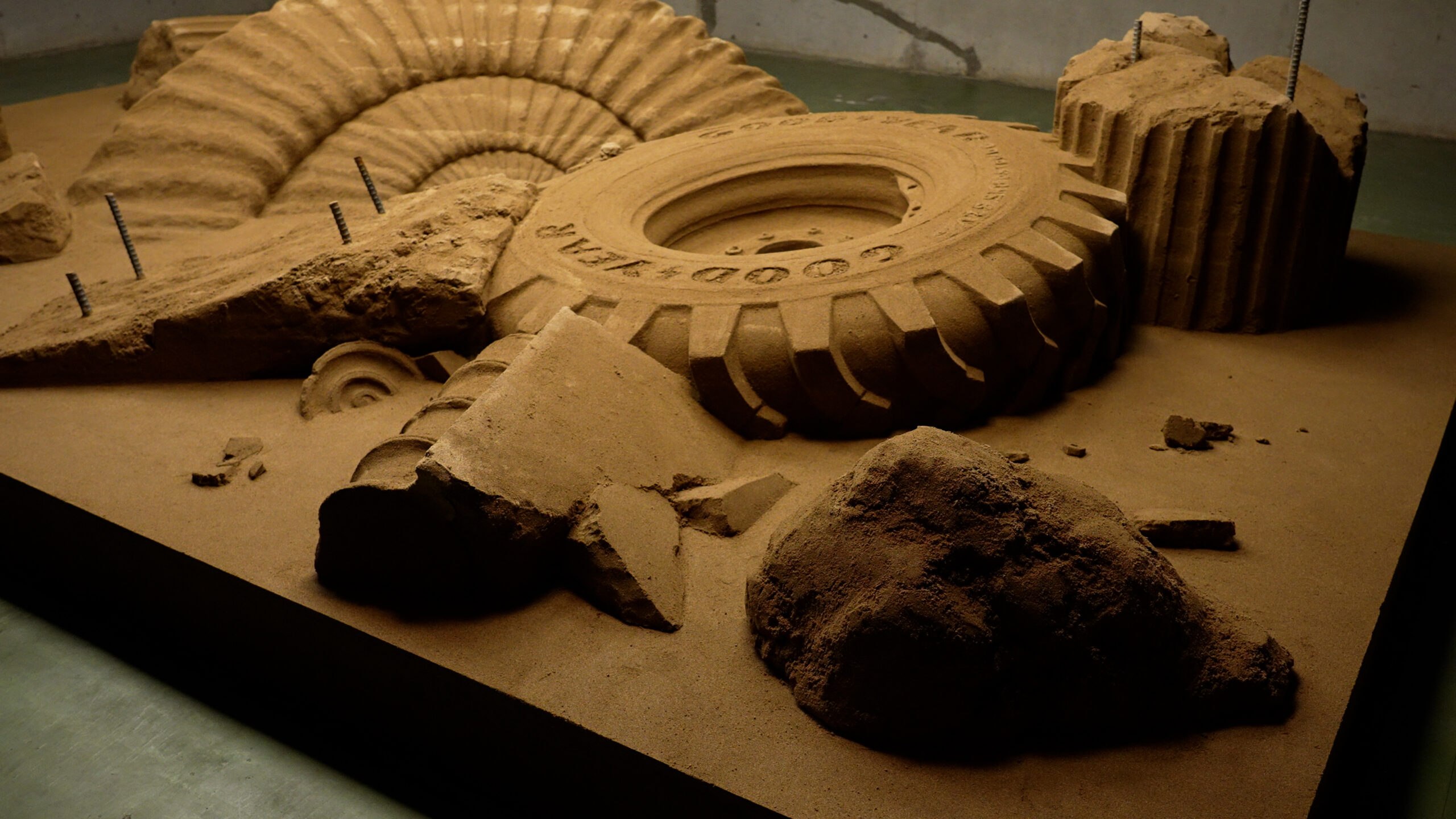
Théo Mercier’s sand installation LANDSCRIPT, produced in situ, reveals familiar, everyday forms sculpted with disarming precision. Yet within this material clarity, subtle glitches—edges that slump, surfaces that pit—betray an inherent instability. Over the duration of the exhibition the pieces shift, settle, and erode, as if caught mid-transformation: not ruins commemorating a finished past, but forms actively becoming ruins. These probable-fragile architectures rise like vestiges: traces of human presence that speak less to permanence than to the uncertain afterlives of what we leave behind. In this sense, LANDSCRIPT resonates with Marc Augé’s reflections on modernity and the fate of ruins. In Le Temps en ruines [Time in Ruins](2003), the author suggests that the acceleration of contemporary time and reconstruction deprives debris of the interval required to become “ruins” in the classical sense. Théo Mercier counters this haste by staging duration itself: his provisional monuments insist on time, letting erosion be visible rather than erased. The identifiable shapes he carves—at once recognizable and unstable—summon both collective and personal recollections, reminding us that recognition is never universal but refracted through the prism of individual histories, experiences, and cultural narratives. x